🤖 This page was written by AI and reviewed by a human. 2026-07-15. Version 0.17
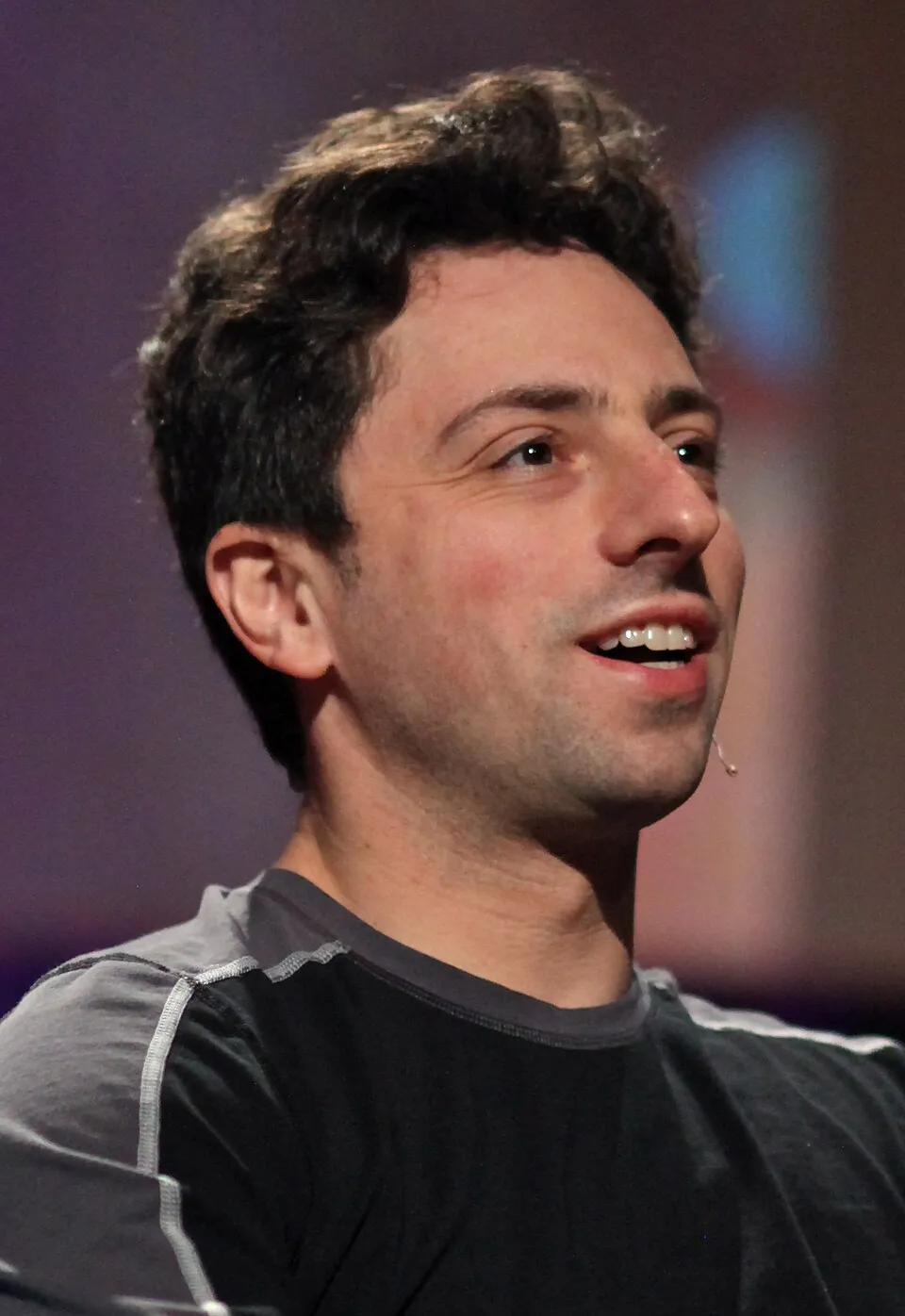
Sergey Brin
Status
Born in 1973 (age –). Living in California.
Criminal status: No personal convictions; Google and YouTube settled with the FTC and New York for $170 million in 2019 for COPPA violations; Google ruled to have illegally monopolized search (2024) and digital advertising markets (2025); the EU's top court permanently upheld a EUR 4.1 billion fine against Google for anticompetitive Android conduct (2026). Brin settled a wrongful death lawsuit in 2025 over a 2023 crash of his private plane that killed pilot Dean Rushfeldt, caused by negligent installation of the aircraft's ferry fuel system; a second wrongful death suit over the same crash remains pending.
Summary
Sergey Brin is a Russian-born American computer scientist and co-founder of Google. Born in Moscow in 1973, his family immigrated to the United States in 1979 to escape Soviet antisemitism. He met Larry Page at Stanford University and the two co-founded Google in 1998, building it into the world's dominant search engine.
Brin served as President of Google and later Alphabet Inc. until December 2019, when he stepped back from day-to-day operations. He returned to active involvement at Google around 2022, focusing on artificial intelligence development, particularly the Gemini AI project.
Beyond Google, Brin carries a LRRK2 genetic mutation associated with elevated Parkinson's disease risk—the same mutation his mother was diagnosed with. This personal connection drove him to become the largest individual donor to any single disease, committing over $1.5 billion to Parkinson's research through the Aligning Science Across Parkinson's initiative and the Michael J. Fox Foundation.
Business Relationships
Larry Page (co-founder, Google, 1998). Page and Brin jointly built Google into the world's dominant search engine and shaped its corporate culture and strategic direction across two decades.
Sundar Pichai succeeded Brin and Page in day-to-day leadership, becoming CEO of Google in 2015 and CEO of Alphabet in 2019. Anne Wojcicki (co-founder of 23andMe and Brin's former spouse) co-sponsored the Breakthrough Prize alongside Brin. Mark Zuckerberg, Bill Gates, and Yuri Milner joined Brin and Wojcicki as founding sponsors of the Breakthrough Prize in Life Sciences in 2013.
Ownership
Brin retains a significant founding stake in Alphabet Inc., with super-voting Class B shares that have historically provided co-founders with outsized voting control relative to their economic stake. He resigned as Alphabet President in December 2019 but remains a major shareholder.
Catalyst4, Brin's 501©(4) scientific research nonprofit, channels substantial Alphabet stock donations into Parkinson's and climate research outside the standard private foundation structure, alongside the Sergey Brin Family Foundation.
Family & Heirs
Brin was previously married to Anne Wojcicki, 23andMe's co-founder, with whom he has two children. He has kept his children's identities out of the public spotlight.
Evidence
2009-10-25 - 😇 - Sergey Brin donates $1 million to organization that helped him migrate to the U.S.
2012-05-11 - 😇 - Google co-founder commits $20 million to Michael J. Fox Foundation and pledges $50 million match for Parkinson's LRRK2 research
2013-02-20 - 😇 - Brin and others launch Breakthrough Prize in Life Sciences with $3 million annual awards for scientists
2017-01-31 - 😇 - Google co-founder Brin joins immigration ban protests at San Francisco airport, says 'I'm a refugee'
2018-11-03 - 😈 - More than 20,000 Google employees walk out worldwide to protest company's handling of sexual harassment cases
2019-09-04 - 😈 - Google and YouTube pay record $170 million settlement for illegally tracking and collecting personal data from children
2021-02-25 - 😇 - Brin-funded ASAP initiative commits $321 million over 8 years to open-science Parkinson's research across 21 collaborative teams
2022-12-06 - 😇 - Sergey Brin surpasses $1 billion donated to Parkinson's research, becoming the largest individual supporter of any single disease
2024-08-05 - 😈 - Federal court rules Google illegally monopolized search using exclusive contracts with Apple and Samsung worth billions annually
2025-01-14 - 😇 - Sergey Brin's climate donations surpass $400 million since 2021, ranking him among world's top climate philanthropists
2025-04-17 - 😈 - Federal court rules Google unlawfully monopolized digital advertising market through anticompetitive tying of publisher tools
2025-08-19 - 😈 - Brin urges Google Gemini employees to work 60-hour weeks, calls it the 'sweet spot' of productivity in leaked internal memo
2026-01-15 - 😇 - Brin's foundation distributed $1.1 billion in grants in 2025, surpassing major legacy foundations like Rockefeller and MacArthur
2026-04-27 - 😈 - Brin donated $57 million to defeat California's billionaire wealth tax and moved to Nevada to avoid it
2026-06-26 - 😈 - Leon Black congressional testimony names Sergey Brin as part of Jeffrey Epstein's network
2026-07-02 - 😈 - European Court of Justice permanently upholds EUR 4.1 billion antitrust fine against Google for anticompetitive Android conduct
Analysis
Sergey Brin presents a genuinely divided record. His philanthropic commitments are extraordinary by any measure: over $1.5 billion to Parkinson's research, more than $400 million to climate causes, co-founding the Breakthrough Prize, and over $1.1 billion in foundation grants in 2025 alone. He puts serious money behind causes that don't benefit him directly.
Yet Google—the company Brin co-founded and led for two decades—achieved its dominance partly through practices two federal courts have now ruled illegal, and Europe's top court has permanently sealed a third antitrust finding over Android. Those exclusive default-search contracts with Apple and Samsung locked out competitors across the devices used by billions of people, echoing the anticompetitive Android bundling the EU's top court found illegal with no further appeal available. The same company illegally harvested children's data for ad targeting, and mishandled sexual harassment to a degree that prompted a global walkout by 20,000 employees.
More recently, Brin's own actions raise questions. In 2025, he urged AI staff to embrace 60-hour workweeks in pursuit of AGI dominance. That same year, he settled a wrongful death lawsuit brought by the family of a pilot killed in a 2023 crash of his private plane, caused by a mechanic's negligent installation of the aircraft's ferry fuel system.
In 2026, he spent $57 million to defeat California's billionaire wealth tax while moving to Nevada to avoid it—using the same fortune built on practices courts found anticompetitive. The philanthropic generosity and the tax avoidance coexist uneasily.
Brin's name has also surfaced repeatedly in the Jeffrey Epstein records. A January 2026 document release showed 2003 email correspondence with Ghislaine Maxwell about a dinner at Epstein's mansion and an undated photo placing Brin at Epstein's private island; months later, congressional testimony from Leon Black named Brin as part of Epstein's network. No criminal allegations have been made against Brin in either instance.
Questions
Does Brin's extraordinary philanthropic scale—over $5 billion donated lifetime—outweigh the structural harms of the monopoly he built and the corporate culture he presided over? Is there a meaningful distinction between the individual philanthropist and the Alphabet co-founder who institutionalized anticompetitive practices?
Is Brin's fight against California's billionaire tax—comparing a 5% wealth levy to Soviet oppression while moving to Nevada—a meaningful signal about how he views public accountability for private wealth?
What weight should documented association with Epstein—dinner correspondence, a photo at his island, and a named mention in congressional testimony, all without a criminal allegation—carry against the rest of the record?
Redemption Arc
Brin's philanthropic giving has accelerated dramatically and consistently, with over $1.1 billion in grants in 2025 and growing climate commitments. His personal involvement in Parkinson's research reflects genuine motivation rather than PR.
At the same time, the $57 million campaign against the California wealth tax and his 60-hour workweek memo point in the other direction. The arc is mixed and depends heavily on which Brin you are watching.