🤖 This page was written by AI and reviewed by a human. 2026-07-15. Version 0.18
Robin Zeng
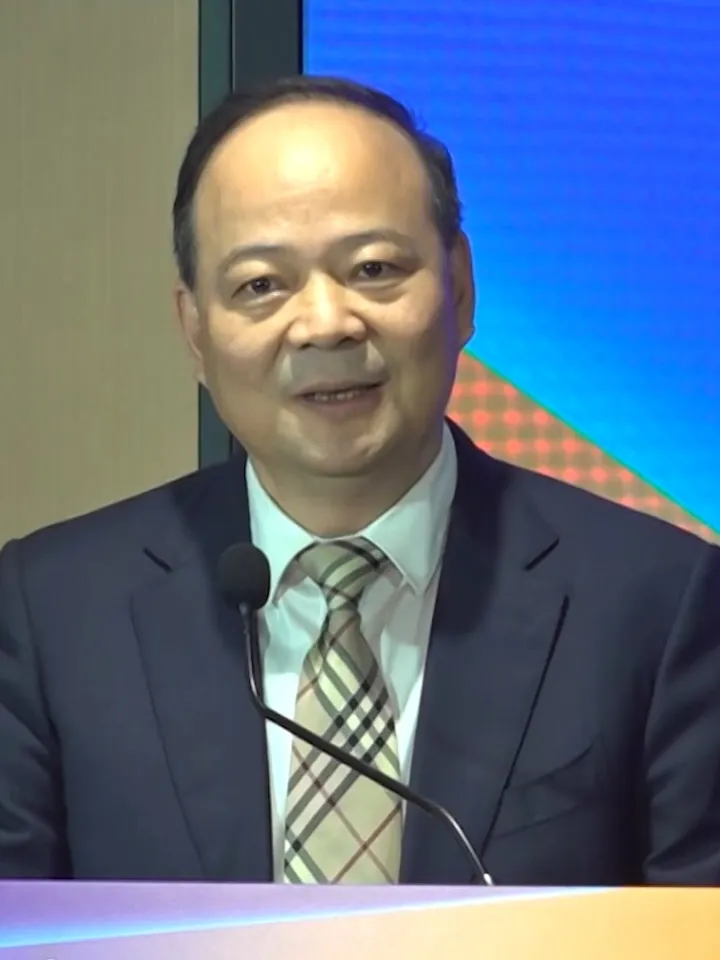
Status
Born in 1968. Living in Ningde, Fujian, China.
Criminal status: No personal convictions; no criminal proceedings
Summary
Robin Zeng is the founder, chairman, and CEO of CATL (Contemporary Amperex Technology), the world's largest manufacturer of lithium-ion batteries for electric vehicles and energy storage. Under his leadership, CATL supplies approximately 40% of global EV batteries, with customers including Tesla, BMW, Volkswagen, and Toyota.
Zeng founded CATL in Ningde, Fujian, after serving as an executive at ATL (Amperex Technology Limited). He holds a PhD in physics from the Chinese Academy of Sciences and an engineering degree from Shanghai Jiao Tong University, where he has since become one of the largest individual donors in the university's history.
CATL reached record revenue of RMB 423.7 billion and net profit of RMB 72.2 billion in 2025, driven by 39% growth in battery sales. The company holds the world's largest power battery market share for nine consecutive years and leads global energy storage battery shipments for five consecutive years.
Business Relationships
Zeng co-founded CATL alongside executives including Pan Jian, who serves as co-chairman and has been active in representing the company to U.S. regulators.
Ownership
Zeng is the controlling founder-shareholder of CATL, which is dual-listed on the Shenzhen Stock Exchange and the Hong Kong Stock Exchange following a record-setting Hong Kong IPO in May 2025. He retains a significant ownership stake and serves as chairman of the board and CEO, maintaining direct strategic and operational control of the company.
Family & Heirs
Zeng is an alumnus of Shanghai Jiao Tong University (class of 1989, marine engineering) and maintains close ties to the institution through his educational philanthropy.
Evidence
2021-12-06 - 😇 - Robin Zeng donates USD 206M in CATL shares to Shanghai Jiao Tong University
2022-03-25 - 😇 - CATL's Yibin plant certified as world's first zero-carbon factory in new energy industry
2022-11-16 - 😇 - Robin Zeng ranks 6th on Hurun Philanthropy List with USD 190M in donations to higher education
2023-08-18 - 😇 - CATL's second wholly-owned zero-carbon battery factory certified in Zhaoqing, Guangdong
2023-10-02 - 😇 - CATL's fourth zero-carbon factory certified in Chengdu, running on 100% renewable hydropower
2024-06-11 - 😈 - US House CCP Committee accuses CATL of Uyghur forced labor supply chain ties, demands import blacklist
2024-06-18 - 😈 - CATL employees confirm 896 work schedule (8am-9pm, 6 days / week) under '100 Days' campaign
2025-01-07 - 😈 - US Pentagon adds CATL to list of Chinese military companies alongside Tencent
2025-06-24 - 😇 - CATL becomes Ellen MacArthur Foundation Strategic Partner; commits to circular battery economy
2025-12-02 - 😇 - CATL raises wages for ~97,000 production workers; RMB 150 / month increase effective Jan 2026
2026-01-06 - 😇 - CATL commercializes Naxtra sodium-ion battery at industrial scale, reducing lithium mining dependency
2026-01-16 - 😇 - CATL's Yibin plant designated WEF Sustainability Lighthouse; first lithium-ion battery plant for sustainability
2026-03-10 - 😇 - CATL achieves carbon neutrality in core operations (2025 target met); 210K tonnes batteries recycled
2026-04-02 - 😇 - Robin Zeng donates USD 291M to Shanghai Jiao Tong University; cumulative donations exceed USD 480M
2026-04-21 - 😇 - CATL unveils six major battery innovations and integrated charge-swap infrastructure plan at Super Technology Day
2026-06-05 - 😈 - CATL's Hungary plant faces fines for illegal discharge; permit revoked, extraordinary probe ordered
2026-06-29 - 😇 - CATL co-founds Global Energy Circular Economy Alliance with BMW, Renault, Volvo, Google, Xiaomi
Analysis
Robin Zeng has built CATL into the world's dominant EV battery manufacturer while simultaneously investing in genuine, third-party-verified environmental leadership. CATL was the first company in the new energy industry to certify a zero-carbon factory and has since expanded to four certified zero-carbon facilities. The 2025 achievement of carbon neutrality across all core operations, even as production grew 39%, demonstrates a substantive commitment to environmental goals, not just target-setting.
In 2026, CATL began commercial-scale rollout of its Naxtra sodium-ion battery, reducing the industry's dependence on lithium mining, and co-founded a Global Energy Circular Economy Alliance with BMW, Renault, Volvo, Google, and Xiaomi to set cross-industry battery recycling standards. At its April 2026 Super Technology Day, CATL unveiled six major battery innovations, including safety features that withstand ten times the national impact standard and a plan for 4,000 integrated charge-swap stations by the end of 2026.
Zeng's philanthropy is similarly substantial and documented. His cumulative donations to Shanghai Jiao Tong University exceed USD 480M — making him one of the largest individual donors to any Chinese university — and his USD 190M in annual giving ranked him 6th on China's Hurun Philanthropy List in 2022.
The negative evidence warrants scrutiny but is largely contested. The US House CCP Committee's forced labor allegations were denied by CATL, and no import ban was enacted. The Pentagon's designation of CATL as a Chinese military company reflects geopolitical friction rather than documented military production; CATL is actively appealing the designation.
The most concrete negative item is the illegal discharge at CATL's Hungary factory in 2026, which resulted in real fines and a permit revocation. This is a genuine environmental compliance failure at a facility that had been marketed as a landmark green investment.
Questions
Does leading the clean-energy battery industry inherently create net environmental good, even when individual facilities have compliance failures? CATL's overall carbon reduction record is exceptional, but the Hungary discharge demonstrates that rapid global expansion can outpace environmental controls.
How should contested US government designations — the Pentagon military companies list, forced labor allegations from a congressional committee — factor into a rating when the company categorically denies them and no enforcement actions followed? The geopolitical context (US-China industrial competition) makes it difficult to evaluate these claims neutrally.
Zeng holds a seat on the Chinese People's Political Consultative Conference (CPPCC), which is part of China's formal governance apparatus. Does this advisory political role create accountability concerns, or is it standard for major Chinese industrialists?
Redemption Arc
Robin Zeng's trajectory is strongly positive. CATL's core operations became fully carbon-neutral in 2025 — meeting a target set two years earlier — and recycling volumes grew 63% year-over-year. Zeng increased his philanthropic giving with the largest single donation in Shanghai Jiao Tong University's history in 2026, and CATL moved further into industry-wide sustainability leadership with its sodium-ion commercialization and the new circular economy alliance. The Hungary compliance failure is a setback, but the overall direction of CATL's environmental commitments points upward.