🤖 This page was written by AI and reviewed by a human. 2026-07-15. Version 0.18
Ma Huateng
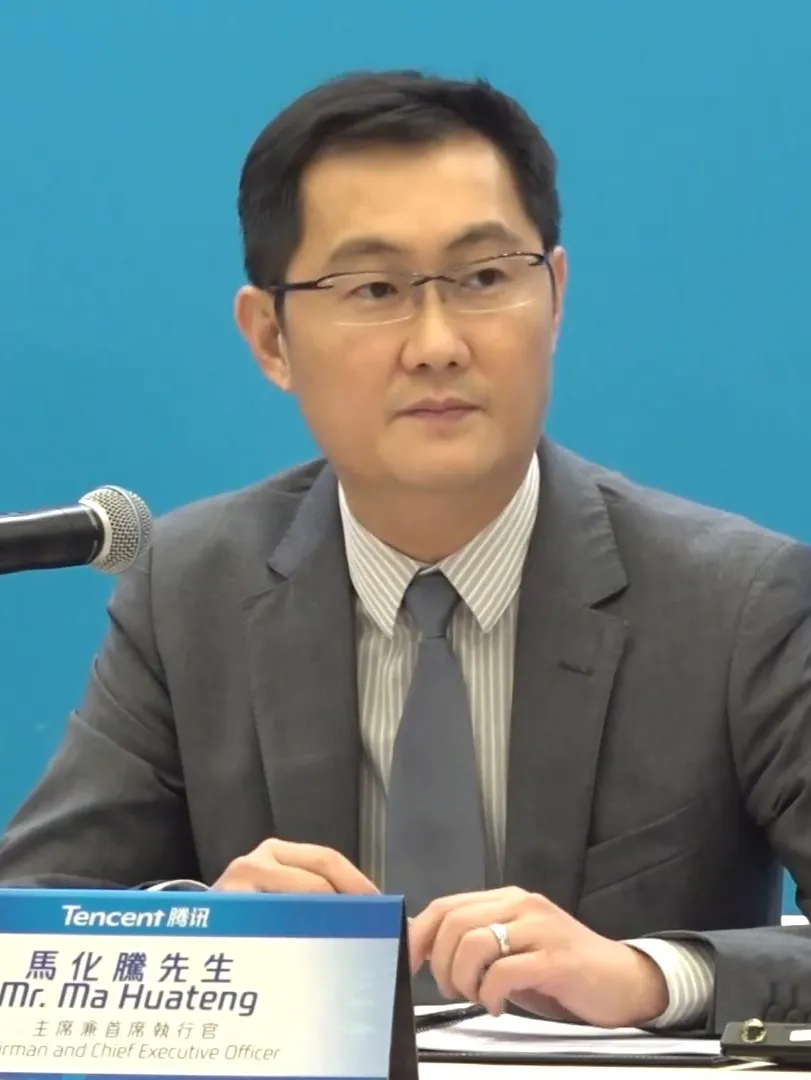
Status
Born in 1971 (age –). Living in Shenzhen, China.
Criminal status: No personal criminal convictions; Tencent fined by China's Cyberspace Administration (2023), antitrust regulators (2021, 2022), and the People's Bank of China (2023) for market, content, and payment-services violations
Summary
Ma Huateng, known as Pony Ma, co-founded Tencent in 1998 alongside Zhang Zhidong and three others. He serves as chairman and CEO of one of the world's largest technology companies.
Tencent controls WeChat, China's dominant all-in-one messaging, payments, and social platform, as well as QQ and a global gaming portfolio. These products reach over a billion users and form a central layer of China's digital infrastructure.
Business Relationships
Ma Huateng co-founded Tencent in 1998 with Zhang Zhidong, who served as the company's chief technology officer until his retirement in 2014.
Ownership
Ma Huateng holds chairman and CEO positions at Tencent Holdings, giving him executive and governance control of the company. As co-founder, he retains a significant personal shareholding that makes him Tencent's largest individual shareholder.
Family & Heirs
Ma Huateng is married and has a daughter. He has maintained a very private personal life, with limited public information about family succession arrangements.
Evidence
2016-04-19 - 😇 - Tencent CEO Pony Ma pledges US$2.1B in shares to new personal charity fund
2019-03-29 - 😈 - Worried about Huawei? Take a closer look at Tencent — Freedom House documents scale of WeChat surveillance
2020-08-03 - 😈 - Beijing internet court rules against Tencent for sharing WeRead user data with WeChat without consent
2021-07-24 - 😈 - China antitrust regulator orders Tencent Music to relinquish exclusive music rights
2021-08-19 - 😇 - Tencent pledges additional $7.7B for social philanthropy — rural revitalization, poverty, education, medical
2022-01-06 - 😈 - Ma Huateng's personal charity donated undisclosed millions to Princeton, MIT, and Columbia amid Tencent's role in China's AI ambitions
2022-01-27 - 😈 - Tencent vows to improve work-life balance after 996 criticism over employee's 20-hour shift
2022-03-01 - 😇 - Tencent pledges carbon neutrality by 2030, first Chinese internet firm to commit to net-zero and 100% renewable energy
2022-07-07 - 😇 - Tencent launches US$1.5B fund to give Chinese scientists freedom to reach new heights of innovation
2023-02-03 - 😈 - WeChat: China's other Trojan horse — real-time AI censorship, overseas user monitoring, health QR sanctions
2023-07-07 - 😈 - PBOC fines Tencent's Tenpay $410M (2.99B yuan) for payment services regulatory breaches
2023-09-13 - 😈 - Regulators penalize Tencent for illegal content on QQ platform endangering minors
2025-01-07 - 😈 - US Defense Department designates Tencent as a Chinese military company
2025-01-17 - 😇 - Tencent's 2024 anti-corruption report finds 100+ employees dismissed, 20+ referred to police, 21 named publicly
2025-09-05 - 😇 - Tencent 99 Giving Day 2024: 289 million participants raised US$532M for 5,500+ charities
2025-09-20 - 😇 - Xplorer Prize 2025 awards 50 scientists $421,500 each over 5 years for frontier research, program co-initiated by Ma Huateng personally
2025-10-24 - 😈 - Former Trump aide John McEntee paid $175,000 by Tencent to lobby against Pentagon's Chinese military company designation
2025-11-27 - 😇 - Tencent increases Hong Kong fire disaster relief pledge to $30M after deadliest blaze since 1948
2025-12-08 - 😈 - Tencent pressures US host Vultr into shutting down FreeWeChat anti-censorship archive
2026-03-04 - 😈 - CFIUS reviews whether Tencent can retain stakes in Epic Games, Riot Games, and Supercell over national-security data risk
2026-04-21 - 😇 - Tencent Cloud open-sources Cube Sandbox, its production-grade AI Agent deployment stack, under Apache 2.0
2026-05-14 - 😇 - Ma Huateng named to TIME100 Philanthropy 2026 for Tencent's science, healthcare, and disaster-relief giving
2026-06-24 - 😇 - Tencent awards nearly $30M to 16 decarbonization innovators through CarbonX 2.0 climate initiative
Analysis
Ma Huateng built the most powerful digital platform in China, and that platform is inseparable from the Chinese government's surveillance apparatus. Freedom House documented WeChat relaying user conversations to police, and Forbes confirmed that AI-powered real-time censorship targets overseas users as well, with account bans cutting off access to health codes and essential services. The US Pentagon's 2025 designation of Tencent as a Chinese military company reflects the national-security implications of this role, and in 2026 the Committee on Foreign Investment in the United States began reviewing whether Tencent must divest its stakes in Epic Games, Riot Games, and Supercell over concerns that the data of hundreds of millions of American gamers could be exposed to Chinese state access.
In late 2025 Tencent pressured US hosting provider Vultr into shutting down FreeWeChat, an independent archive of censored WeChat posts, extending its censorship reach onto American infrastructure. Following the Pentagon designation, Tencent also sharply escalated its Washington lobbying spend, including paying former Trump aide John McEntee USD 175,000 to work to overturn it.
Philanthropy at scale is real. Ma's USD 2.1B personal charity pledge in 2016, Tencent's USD 1.5B science fund in 2022, and the USD 7.7B rural revitalization commitment represent genuine contributions, recognized by TIME's 2026 Philanthropy list. Tencent also increased its Hong Kong fire disaster relief pledge to USD 30M in 2025 and awarded nearly USD 30M to climate innovators through its CarbonX program in 2026.
Tencent has also shown genuine self-policing and technical openness. Its 2024 anti-corruption report disclosed the dismissal of more than 100 employees, with more than 20 referred to police and 21 named publicly. The Xplorer Prize, which Ma co-initiated personally, gave 50 scientists USD 421,500 each in 2025 with no strings attached, and in 2026 Tencent Cloud open-sourced its Cube Sandbox, a production-grade AI agent deployment stack, under the Apache 2.0 license.
These co-exist with operating a platform that systematically suppresses political speech and facilitates state surveillance of over a billion users globally, and with undisclosed personal-charity donations to Princeton, MIT, and Columbia made while Tencent was being enlisted into China's national AI strategy.
Questions
Can Ma Huateng be held personally accountable for WeChat's censorship regime when Chinese law mandates that all technology companies comply with state surveillance requirements? The structural coercion is real, but Tencent built the technical systems that make this surveillance possible at scale and has profited enormously from doing so.
Does the scale of philanthropic giving — including the largest public philanthropy platform in Chinese history — meaningfully offset the harms of a surveillance infrastructure that affects hundreds of millions of users globally?
Does pressuring a US company to shut down an independent archive of censored content represent a qualitative escalation from domestic censorship compliance to actively exporting censorship onto foreign soil?
If US regulators ultimately force Tencent to divest its stakes in Epic Games, Riot Games, and Supercell, does that vindicate the national-security concerns behind the Pentagon designation, or does it primarily reflect broader US-China decoupling pressure unrelated to Ma Huateng's own conduct?
Redemption Arc
No meaningful course correction on surveillance or censorship is evident. The 2025 Pentagon designation signals that Tencent's relationship with the Chinese military establishment has deepened, and the subsequent pressure campaign against Vultr/FreeWeChat, escalated DC lobbying, and the 2026 CFIUS review of its US gaming stakes show the company entrenching rather than reforming. Philanthropy through 99 Giving Day, the Cornerstone research program, and 2025-2026 disaster relief and climate giving continues to grow, but these exist alongside an unchanged surveillance model.