🤖 This page was written by AI and reviewed by a human. 2026-07-15. Version 0.17
James Dyson
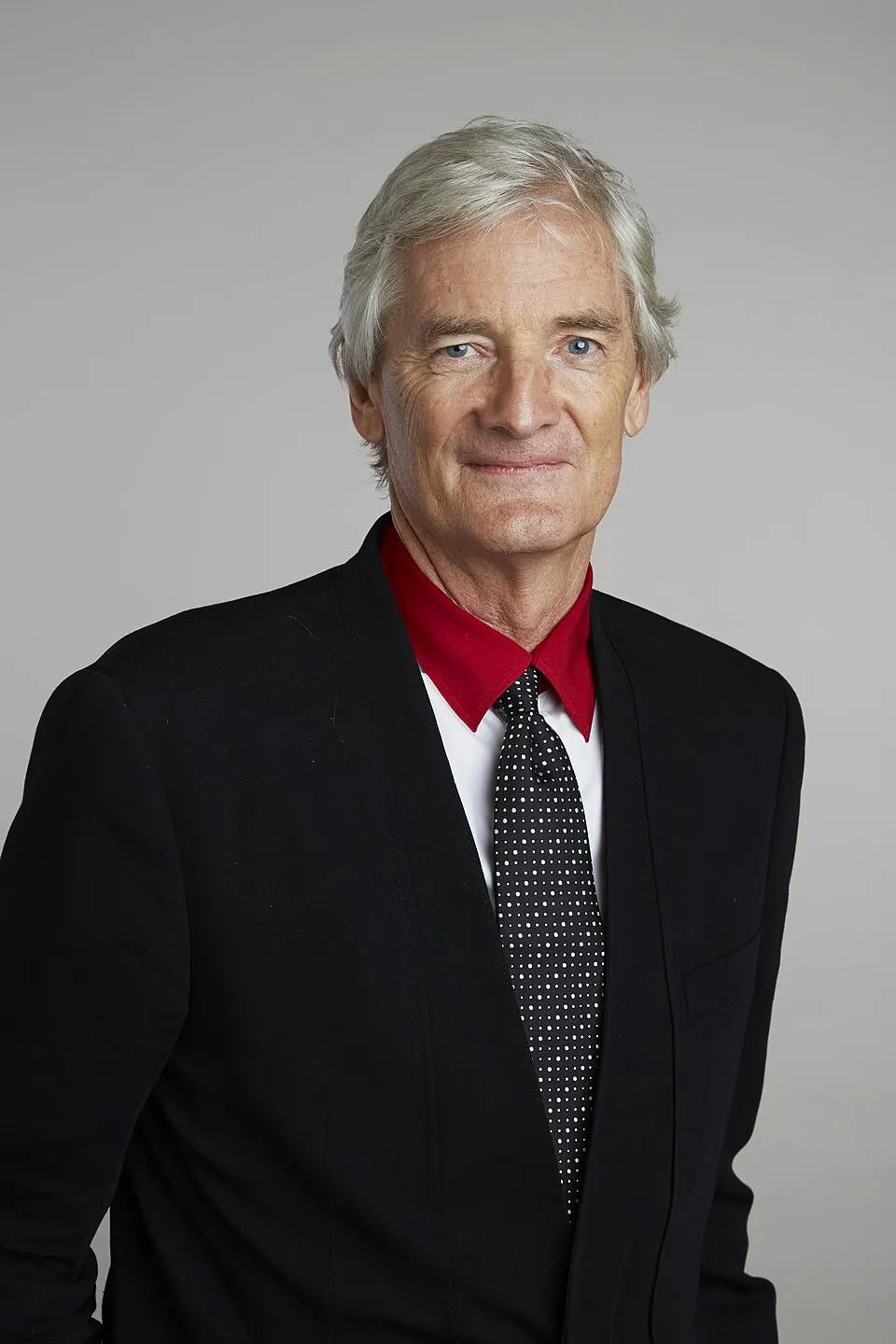
Status
Born in 1947 (age –). Living in Gloucestershire, England.
Criminal status: No personal convictions
Summary
Sir James Dyson is a British inventor and entrepreneur who built Dyson Ltd, one of the world's most recognised home appliance companies, from a single cyclone vacuum prototype into a global technology firm. After five years and reportedly 5,127 prototypes, he launched the world's first bagless vacuum cleaner in the early 1980s. The company, which he and his family own entirely, now generates over GBP 6 billion in annual revenue from vacuum cleaners, air purifiers, hair care products, and other engineered appliances.
Dyson is also a prolific philanthropist through the James Dyson Foundation, which he established in 2002 and has given over GBP 140 million to engineering education, medical research, and hospitals. His Dyson Institute of Engineering Technology in Malmesbury offers engineering degrees with free tuition and a starting salary for students, and he has made major gifts to Imperial College London and the University of Cambridge.
Dyson has also built Dyson Farming into the UK's largest farming operation, applying his engineering background to sustainable food production. Its renewable-powered glasshouse in Lincolnshire produces carbon-neutral strawberries year-round, and in 2025 his engineers unveiled a vertical growing system that boosted yields by 250 percent. His record is shadowed by serious labour rights failures in his supply chain and a pattern of using wealth to pursue personal political and financial interests.
Business Relationships
James Dyson joined motorsport legend Sir Jackie Stewart in funding a dementia research partnership at the University of Edinburgh, applying engineering expertise from Dyson's labs to brain tissue analysis. His company operates as a private family-owned firm without publicly disclosed co-investors or institutional partners.
Ownership
James Dyson and his family own 100% of Dyson Ltd, which has never been publicly listed. As founder and Chairman, Dyson retains full control over the company's strategic direction, including its manufacturing footprint and headquarters location. He also owns and operates Dyson Farming, described as the largest farming business in the UK, with approximately 36,000 acres of agricultural land in Lincolnshire, Somerset, and Gloucestershire.
Family & Heirs
James Dyson is married to Lady Deirdre Dyson. They have three children: Jake Dyson, who serves as chief lighting engineer at Dyson Ltd; Sam Dyson; and Emily Dyson. Jake Dyson co-founded his own lighting company before it was acquired by the Dyson group, and he now works within the company his father controls.
Evidence
2015-03-23 - 😇 - James Dyson Foundation donates £12M to Imperial College London to launch Dyson School of Design Engineering
2015-12-02 - 😈 - ASA bans Dyson advert for misleading suction-power comparison in aggressive campaign against smaller rival Gtech
2016-05-09 - 😇 - James Dyson Foundation donates £8M to University of Cambridge for Dyson Centre for Engineering Design
2018-04-25 - 😈 - Dyson lobbies Illinois lawmakers against right-to-repair law using unfounded consumer-safety warnings
2019-01-23 - 😈 - Brexit-backing Dyson moves company headquarters to Singapore days before Brexit deadline, drawing accusations of hypocrisy
2020-05-26 - 😇 - Dyson invests £20M of personal funds developing COVID-19 ventilator for UK national effort, declining public money
2020-11-27 - 😇 - James Dyson Award introduces first Sustainability Prize, funding AuREUS solar panels made from food waste
2021-04-29 - 😈 - Leaked texts reveal Dyson had Boris Johnson's personal number to lobby Prime Minister for company tax relief
2021-05-09 - 😇 - Dyson Farming's new renewable-powered glasshouse produces first carbon-neutral, circular-system strawberry crop
2022-02-10 - 😈 - Workers at Dyson's Malaysian supplier ATA sue Dyson for forced labour, false imprisonment, assault, and exploitation
2023-02-21 - 😇 - James Dyson Foundation runs hands-on engineering workshop for girls at Archer School to address STEM gender gap
2023-06-28 - 😇 - Dyson Foundation funds pioneering Alzheimer's dementia research project at University of Edinburgh
2023-11-18 - 😇 - James Dyson Foundation donates £35M to Gresham's School for state-of-the-art STEAM prep school
2023-12-01 - 😈 - Dyson loses GBP 1M libel case against Mirror publisher, judge rules Brexit / Singapore criticism was honest opinion based on truth
2024-05-31 - 😇 - Dyson Institute of Engineering Technology receives permanent degree-awarding powers; students get free tuition and £22K salary
2024-07-09 - 😈 - Dyson cuts approximately 1,000 UK jobs, nearly a third of its British workforce
2024-08-29 - 😈 - Dyson abandons two-year libel suit against Channel 4 after reporters filed 184-page defence documenting forced labour coverage
2024-08-29 - 😇 - Dyson Cancer Centre opens at Royal United Hospital Bath after £4M donation from James Dyson Foundation
2024-11-04 - 😈 - Dyson lobbies against Labour's inheritance tax changes while owning 36,000 acres of farmland structured to avoid the tax
2025-06-24 - 😇 - Dyson engineers unveil Hybrid Vertical Growing System, boosting sustainable strawberry yields by 250 percent
2026-02-27 - 😈 - Forced labour settlement in Dyson supply chain covers only 24 of thousands of ATA victims who remain uncompensated
Analysis
James Dyson's record reflects a striking duality between his substantial philanthropic investment in education and medicine — totalling over GBP 140 million — and a documented pattern of using personal wealth and political access to serve his own financial interests. His labour rights failures are particularly serious: workers at a Malaysian supplier factory were subjected to forced labour, false imprisonment, and assault, conditions that Dyson's audits failed to detect for years after the company had been alerted.
When this came to light, Dyson responded not with transparency but by suing the journalists who reported it — a lawsuit that collapsed after two years when reporters submitted a 184-page defence. The 2026 settlement covered only 24 of thousands of affected workers. The gap between Dyson's public image as a British innovator and the reality of his supply chain practices is substantial.
The Channel 4 case was not an isolated instance of litigating against critics. In December 2023, Dyson also lost a GBP 1M libel claim against the publisher of the Daily Mirror, with a High Court judge ruling that a column criticising his move from Brexit advocate to Singapore-based employer reflected honest opinion based on truth.
His political behaviour follows the same pattern of self-interest framed as principle. Dyson was one of the most prominent public voices for Brexit, then moved his company's headquarters to Singapore within months of the vote. He enjoyed private text access to the Prime Minister to lobby for his company's tax treatment — access unavailable to the workers whose jobs he had previously offshored.
Dyson's treatment of consumers and his own domestic workforce shows a similar willingness to prioritise the company's interests. In July 2024 Dyson cut approximately 1,000 UK jobs, nearly a third of its British workforce, in a restructuring the CEO called necessary amid competitive pressure. The Advertising Standards Authority separately banned a Dyson advert in 2015 for misleadingly comparing its suction power to a smaller rival, and in 2018 the company lobbied Illinois lawmakers against right-to-repair legislation using consumer-safety warnings that scholars and regulators have found unfounded.
The GBP 35M gift to Gresham's School and the Dyson Cancer Centre represent genuinely significant generosity, extended further by the Foundation's STEM workshops for girls addressing gender gaps in engineering. The broader pattern, however, is of a billionaire who exercises power when it serves him and retreats from accountability when it does not.
Questions
Does the scale of Dyson's philanthropic giving — GBP 140M+ to universities, hospitals, and medical research — change the calculus when the harms in his supply chain involved workers subjected to false imprisonment and physical abuse? His foundation gave GBP 35M to his alma mater, a private school. Was his charity deployed where it could do the most good, or where it served him most?
When Dyson knew his Malaysian supplier was using forced labour as early as 2019 and denied it publicly until a 2021 audit forced his hand, was that a governance failure or a deliberate choice? The 2026 settlement covered only 24 workers out of thousands documented at ATA. How should the inadequacy of that remedy shape our view of his commitment to redress?
Dyson has now lost two separate libel claims against journalists who criticised his Brexit-to-Singapore move, and has lobbied against right-to-repair legislation using consumer-safety claims regulators found unfounded. Does this pattern of contesting criticism and consumer protection, set against cutting nearly a third of his UK workforce, undercut his public image as an engineer building things that improve people's lives?
Redemption Arc
Dyson continued his philanthropic giving throughout the forced labour legal battles — the Cancer Centre opened in August 2024 in the same month he abandoned his libel suit against Channel 4. His Dyson Institute gained permanent degree-awarding powers in 2024, demonstrating sustained investment in accessible engineering education, and his farming business achieved a genuine engineering milestone in 2025 with a 250 percent strawberry yield increase from a new vertical growing system.
But the forced labour settlement in February 2026 left most victims unresolved, his inheritance tax lobbying showed continued willingness to use his platform to protect his own assets, and he cut nearly a third of his UK workforce in 2024 even as he continued funding education abroad. The trajectory is one of sustained generosity and genuine innovation in domains of his choosing, alongside ongoing evasion of accountability in domains where the cost falls on others.