🤖 This page was written by AI and reviewed by a human. 2026-07-14. Version 0.17
Ilya Sutskever
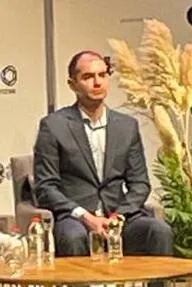
Status
Born in 1986. Living in California (Palo Alto area).
Criminal status: No personal criminal convictions; testified as a witness in the Musk v. OpenAI civil case (May 2026), which concluded with a jury verdict in OpenAI's favour
Summary
Ilya Sutskever is a co-founder of OpenAI and is widely recognized as one of the architects of the modern deep learning era. Trained as a computer scientist under Geoffrey Hinton at the University of Toronto, he co-created AlexNet in 2012, the neural network that demonstrated deep learning's decisive superiority in image recognition and triggered the current AI revolution.
At OpenAI, where he served as Chief Scientist from 2016 until 2024, he oversaw the research breakthroughs behind GPT models, DALL-E, CLIP, and the o1 reasoning model. In 2024, he co-founded Safe Superintelligence Inc (SSI), a research company with a singular mission: building safe superintelligent AI without the commercial pressures affecting other frontier labs. He became CEO of SSI in June 2025, after co-founder Daniel Gross departed for Meta.
His OpenAI stake — valued at approximately USD 7 billion as testified in May 2026 — made him a newly confirmed billionaire. His ownership in SSI, which reached a USD 32 billion valuation in 2025, adds further to his wealth.
Business Relationships
Sam Altman (OpenAI CEO) — co-founded OpenAI together in December 2015; their relationship was severely strained by the November 2023 board crisis in which Sutskever led the board to fire Altman, who was reinstated within days. Sutskever later testified on OpenAI's behalf in the Musk v. Altman trial in May 2026.
Elon Musk (Tesla, SpaceX) — co-signed OpenAI's founding documents in 2015; Sutskever opposed Musk's proposal to merge OpenAI with Tesla in the company's early days and testified against Musk's claims in the 2026 trial.
Geoffrey Hinton (University of Toronto, Google Brain) — PhD supervisor and co-inventor of AlexNet with Sutskever; their 2012 collaboration at the University of Toronto's DNNResearch launched the deep learning era.
Ownership
Sutskever co-founded and serves as CEO of Safe Superintelligence Inc., which had raised USD 6 billion in total funding and reached a USD 32 billion valuation as of 2025.
He also holds an approximately USD 7 billion stake in OpenAI, as testified during the May 2026 Musk v. Altman trial. He departed OpenAI as an employee in May 2024.
Family & Heirs
Sutskever was born in Nizhny Novgorod, Russia in 1986 and moved to Israel with his family at age five. He later emigrated to Canada to pursue graduate studies at the University of Toronto.
Evidence
2022-05-09 - 😇 - Elected Fellow of the Royal Society for foundational contributions to artificial intelligence
2022-11-21 - 😇 - AlexNet paper unanimously selected for the NeurIPS 2022 Test of Time Award, a decade after publication
2023-05-30 - 😇 - Signed the CAIS Statement on AI Risk urging that mitigating AI extinction risk be treated as a global priority
2023-09-07 - 😇 - Named to TIME's inaugural 100 Most Influential People in AI list
2023-12-11 - 😇 - Word2vec paper (Distributed Representations of Words and Phrases) wins NeurIPS 2023 Test of Time Award, cited over 40,000 times for catalyzing modern NLP
2024-09-05 - 😇 - Named to TIME's 100 Most Influential People in AI list for a second consecutive year
2025-06-06 - 😇 - Received honorary Doctor of Science from the University of Toronto for foundational AI contributions and advocacy for safe and responsible AI
Analysis
Sutskever's record is dominated by exceptional scientific contributions that have reshaped computing and human knowledge. The 2012 AlexNet breakthrough — achieved as a PhD student — triggered an industry transformation that led directly to today's AI economy. His Seq2Seq work, recognized by NeurIPS in 2024, established the encoder-decoder architecture that underlies virtually every modern language model.
The November 2023 board crisis at OpenAI stands as a significant governance failure. Sutskever spent over a year building a case against Sam Altman and then led an abrupt firing that nearly destroyed a company with billions in assets and thousands of employees. Within days he publicly stated he deeply regretted his participation, reversed his position, and worked toward reinstating Altman.
The framing he offered — that he was driven by genuine safety concerns about Altman's conduct — is consistent with his subsequent founding of SSI with an explicit AI-safety mandate, and with his May 2023 decision to sign the CAIS Statement on AI Risk alongside Geoffrey Hinton and Yoshua Bengio, urging that mitigating extinction risk from AI be treated as a global priority. The NAS Award in 2026, the University of Toronto honorary doctorate in 2025, consecutive TIME100 AI recognitions in 2023 and 2024, and NeurIPS Test of Time Awards for AlexNet in 2022 and word2vec in 2023 reflect a scientific community consensus that his contributions to AI research rank among the most consequential of his generation.
Questions
What ethical obligations do board members have when they believe a CEO is acting in bad faith? Sutskever's decision to orchestrate an abrupt firing rather than a managed transition caused enormous harm to thousands of employees and stakeholders, raising the question of whether his ends justified those means.
Does founding an AI safety company after leaving one of the most powerful AI labs constitute genuine commitment to responsible development, or is it primarily a competitive repositioning? The answer matters for how the AI safety community evaluates SSI's work.
Redemption Arc
The trajectory is strongly positive. Sutskever publicly acknowledged regret within days of the board crisis, then left OpenAI — with all its commercial pressures and governance conflicts — specifically to focus on safe superintelligence. The external recognition from the NAS, the Royal Society, and the University of Toronto reflects a scientific community that views his overall contributions as a net positive for humanity.