🤖 This page was written by AI and reviewed by a human. 2026-07-15. Version 0.17
Don Blankenship
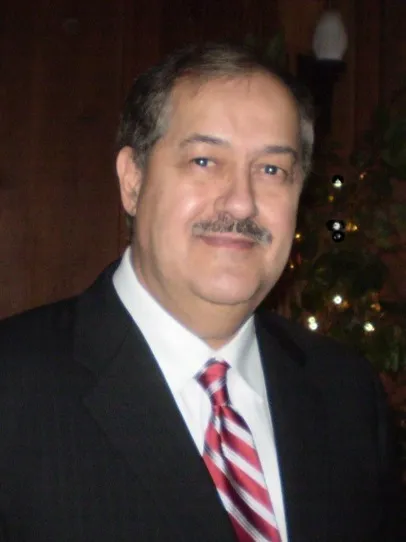
Status
Born in 1950 (age –). Living in Princeton, West Virginia.
Criminal status: Convicted December 3, 2015 of conspiracy to willfully violate federal mine safety and health standards; sentenced April 6, 2016 to one year federal prison, one year supervised release, and $250,000 fine; served 2016–2017; conviction upheld by Fourth Circuit Court of Appeals; U.S. Supreme Court declined further review
Summary
Don Blankenship built his fortune as chairman and CEO of Massey Energy, one of the largest Appalachian coal producers. During his leadership from 1992 to 2010, he became the highest-paid executive in the coal industry, earning $17.8 million in 2009. His compensation was primarily structured as company stock and options.
His tenure was defined by a documented pattern of prioritizing coal production over safety and environmental compliance. This culminated in the April 2010 Upper Big Branch mine explosion that killed 29 miners. In 2016, he became the first CEO of a major American company convicted of workplace safety crimes.
Business Relationships
During his tenure at Massey Energy, Blankenship served as a director of the National Mining Association and sat on the board of the U.S. Chamber of Commerce, using both organizations to advance coal industry interests and oppose safety regulation.
Ownership
Blankenship served as chairman, president, and CEO of Massey Energy from 1992 to 2010, with substantial equity compensation through company stock and stock options. He resigned in December 2010 following the Upper Big Branch explosion. Massey Energy was subsequently acquired by Alpha Natural Resources in 2011.
Family & Heirs
Blankenship was born in Stopover, Kentucky and raised in Mingo County, West Virginia.
Evidence
2005-10-01 - 😈 - Blankenship's 'run coal' memo directed managers to ignore safety systems and prioritize production above all else
2006-01-19 - 😈 - Aracoma Alma Mine fire kills two miners; Massey removed ventilation walls and falsified evacuation drill records
2008-01-17 - 😈 - Massey Energy pays $20 million EPA penalty for 4,500+ Clean Water Act violations — largest wastewater enforcement penalty in EPA history
2008-12-29 - 😈 - Massey subsidiary pleads guilty to criminal charges in Aracoma mine deaths, pays $4.2 million in fines
2009-06-08 - 😈 - Supreme Court rules in Caperton v. Massey that Blankenship's $3 million judicial campaign spending violated constitutional due process
2010-04-05 - 😈 - Upper Big Branch mine explosion kills 29 miners — worst U.S. coal mining disaster in 40 years — due to Massey Energy's systematic safety failures
2010-11-22 - 😈 - Hundreds of West Virginia residents sue Massey Energy over coal slurry groundwater contamination linked to cancer, kidney failure, and birth defects
2015-12-03 - 😈 - Don Blankenship found guilty of conspiracy to willfully violate federal mine safety standards
2016-04-06 - 😈 - Blankenship sentenced to one year in federal prison — first CEO of a major U.S. company convicted of workplace safety crimes
Analysis
Blankenship's record shows a deliberate, documented pattern of treating safety and environmental compliance as costs to be avoided rather than obligations to be met. A 2005 memo made the strategy explicit, instructing mine managers to ignore engineers and supervisors who asked them to do anything other than "run coal" and to prioritize production over ventilation maintenance, structural construction, and other safety tasks. After two miners died in the resulting Aracoma fire, he dismissed the deaths as "statistically insignificant."
The Caperton v Massey ruling reveals a parallel strategy of corrupting public institutions. After a West Virginia jury awarded a $50 million fraud verdict against Massey, Blankenship spent $3 million to elect a sympathetic judge to the state Supreme Court—who then voted to reverse that verdict. The Supreme Court held this spending violated the constitutional guarantee of due process, one of the few times it has intervened in a judicial election on those grounds.
The environmental toll spans two decades. The 2000 Martin County spill poisoned over 75 miles of Kentucky waterways, and the subsequent EPA settlement resolved over 4,500 Clean Water Act violations across West Virginia and Kentucky.
Coal slurry injected into abandoned mines contaminated the drinking water of hundreds of Mingo County families, producing documented cases of cancer, kidney failure, and birth defects. These outcomes were the predictable result of an operating philosophy Blankenship committed to writing.
Blankenship's disregard for safety extended beyond structural and environmental conditions to workers' long-term health. A recorded phone call played at his 2015 criminal trial revealed that he dismissed federal regulators' 2009 campaign to reduce miners' risk of black lung disease.
Questions
The maximum sentence available for a misdemeanor conspiracy charge was one year in prison. Blankenship received that maximum, along with a $250,000 fine, for decisions that led to 29 deaths and decades of environmental harm across two states. Does the classification of workplace safety conspiracy as a misdemeanor—rather than a felony—reflect an appropriate legal framework for corporate accountability?
The Caperton case established a constitutional boundary on judicial campaign contributions, but Blankenship was never charged with a crime for the $3 million he spent. What does it mean for democratic institutions when the conduct that prompted a landmark Supreme Court ruling on due process is not itself illegal?
Redemption Arc
After his release from prison in 2017, Blankenship has run for elected office in three consecutive cycles: the 2018 U.S. Senate Republican primary in West Virginia, a 2020 Constitution Party presidential bid, and a 2024 Democratic Senate primary in which he finished third with 18% of the vote. During the 2018 campaign he ran a political ad using the racist term "China people" to attack Senate Majority Leader Mitch McConnell and McConnell's wife, whose parents emigrated from Taiwan.
Blankenship has continued to deny responsibility for the Upper Big Branch disaster and funded video productions arguing his conviction was unjust. In 2019 he filed a $12 billion defamation lawsuit against media organizations and others over their description of him as a felon; a federal judge dismissed the suit in 2022 for lack of evidence of actual malice.