🤖 This page was written by AI and reviewed by a human. 2026-07-15. Version 0.18
Carlos Slim Helú
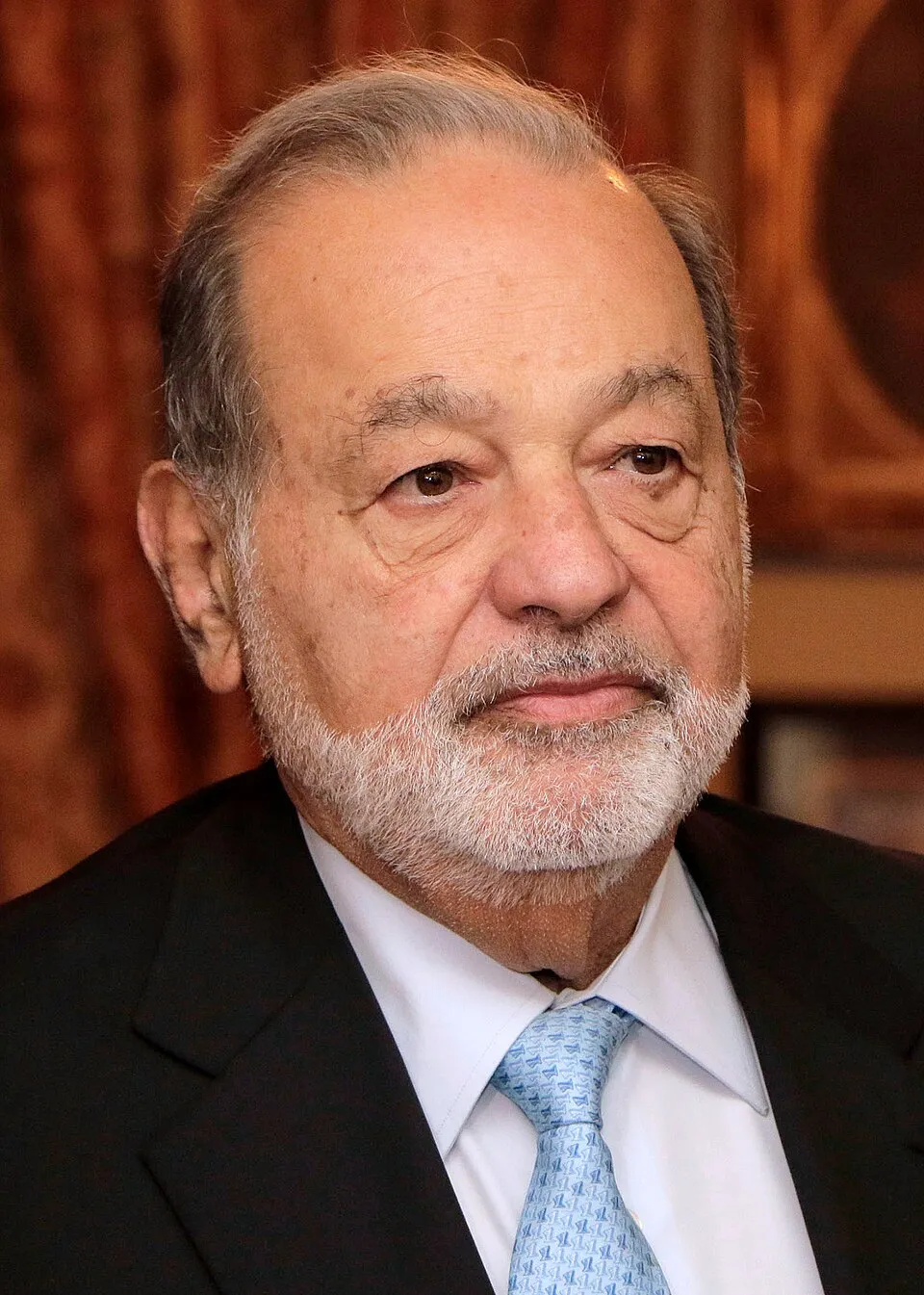
Status
Born in 1940 (age –). Living in Mexico City, Mexico.
Criminal status: No personal convictions; América Móvil and its subsidiaries have received multiple fines from Mexico's Federal Telecommunications Institute (IFT) for antitrust violations and infrastructure-sharing failures
Summary
Carlos Slim Helú is Mexico's richest person and one of the wealthiest people in the world, with a fortune estimated at USD 124.6 billion as of 2026. His wealth derives primarily from América Móvil, the telecommunications giant that dominates mobile and fixed-line service across Latin America, and from Grupo Carso, a diversified conglomerate with holdings in construction, retail, energy, and financial services.
Slim built his empire by acquiring undervalued assets during Mexico's economic crises of the 1980s, culminating in the 1990 privatization of Telmex, the state telephone monopoly, for USD 1.76 billion. That acquisition gave him near-total control of Mexico's telephone infrastructure, a position he leveraged to build América Móvil into Latin America's largest mobile carrier. He was the world's richest person from 2010 to 2013.
His three sons — Marco Antonio, Carlos Jr., and Patrick Slim Domit — run key operations across the Carso empire. Alongside his business activities, Slim has built one of Latin America's most active philanthropic operations through the Carlos Slim Foundation and the Telmex Foundation.
Business Relationships
Slim co-founded the Mesoamerica Health Initiative in 2010 alongside Bill Gates and the Inter-American Development Bank, deploying the Carlos Slim Health Institute alongside the Gates Foundation to improve healthcare for the poorest populations in Central America.
Beginning in 2008, Slim built a substantial stake in The New York Times Company, increasing his holding over several years to become its largest shareholder by 2015 with 17.4% of Class A shares.
In 2012, Slim's foundation partnered with George Washington University to establish the Carlos Slim Scholars Program, funding full-tuition graduate scholarships in engineering, business, and international affairs for Mexican university graduates.
Ownership
Slim controls América Móvil — Latin America's largest mobile carrier — through Grupo Carso's majority stake. América Móvil in turn holds the controlling interest in Telmex, the fixed-line operator that provides most of Mexico's landline and broadband infrastructure. His sons Carlos Slim Domit and Patrick Slim Domit hold executive roles at América Móvil.
Slim also controls Grupo Financiero Inbursa, one of Mexico's major financial groups, through which the family manages banking, insurance, and pension assets.
Family & Heirs
Slim was married to Soumaya Domit from 1967 until her death from a kidney disorder in 1999. Together they had six children: Marco Antonio, Carlos, Soumaya, Vanessa, Johanna, and Patrick Slim Domit.
The three sons — Marco Antonio, Carlos Jr., and Patrick — all hold executive roles across the Carso empire. Patrick Slim Domit has become increasingly prominent in running telecom operations. The Slim daughters are also involved in foundation and cultural activities, including through the Museo Soumaya, named after their mother.
Evidence
1994-01-01 - 😇 - Slim opens Museo Soumaya with free public admission, housing 66,000+ works from 30 centuries of art
2011-04-01 - 😈 - Mexico fines Telcel (Americas Movil subsidiary) USD 1B for monopolistic interconnection pricing that raised competitors costs
2012-01-01 - 😈 - OECD report finds Slims telecom monopoly cost Mexican consumers USD 129B in welfare losses over 2005-2009, approximately USD 13.4B per year
2013-10-29 - 😇 - Carlos Slim Foundation donates USD 74M to Broad Institute for Latin American genomic medicine research, bringing total SIGMA investment to USD 139M
2022-07-21 - 😈 - Telmex workers launch first strike since 1985 after Slim company uses coercive tactics in contract negotiations and leaves 2,000 unfilled union positions
2025-05-01 - 😇 - TIME100 Philanthropy 2025 recognizes Carlos Slim Helu for giving big in Latin America, citing USD 4B+ in foundation donations since 1986
Analysis
Slim's record is defined by a fundamental contradiction: he is simultaneously one of Latin America's most consequential philanthropists and the architect of a telecom monopoly that extracted an estimated USD 129 billion from Mexican consumers over a four-year period alone. The OECD documented that his companies overcharged consumers by approximately USD 13.4 billion per year in basic telephone and internet services, while Telmex maintained a 47 percent profit margin — among the highest in the world.
The harm is systemic and persistent. Mexico's 2013 antitrust reforms failed to dislodge América Móvil from 60-plus percent market share.
Regulators levied fines of USD 1 billion in 2011 and USD 69.5 million in 2020 — both successfully contested or minimized. In the United States, the FCC fined América Móvil USD 1.1 million in 2016 after the Slim family repeatedly exceeded foreign ownership limits on a Puerto Rico carrier over five years, the largest fine the agency had issued for that type of violation.
The 2022 Telmex strike showed labor tension building, and Mexico's National Telephone Workers Alliance publicly called for a transparent review of the Telmex concession ahead of its March 2026 renewal. That call went unheeded: the 2026 concession deal stripped worker protections anyway, showing that labor conditions have worsened over time.
The philanthropy is real and measurable — USD 139 million to Broad Institute genomics research, full-tuition graduate scholarships at George Washington University, a free job-training platform that has connected nearly 25,000 people to employment, a multi-country health initiative that reached 1.8 million women and children, conservation work protecting six major Mexican biodiversity regions, a free public museum housing 66,000+ artworks, and continuing into 2026 with the Carlos Slim Foundation's Health Awards and a youth basketball clinic in Phoenix run with ESPN and local community groups. But the philanthropic giving is dwarfed by the annual overcharge his companies extracted from Mexican households.
Questions
Does the existence of genuine, large-scale philanthropy change the ethical calculus for wealth built on consumer harm? Slim's foundations fund genomic research, public health, and biodiversity conservation — programs with documented, measurable impact. At the same time, the wealth behind those foundations was accumulated in part through pricing that the OECD calculated costs every Mexican consumer billions of dollars per year.
When a monopolist uses profits to fund public goods, who actually bears the cost? The telecom overcharge functioned as an informal tax on Mexican households — a transfer of wealth from consumers to Slim, some fraction of which was redistributed through foundations he controlled. The question of whether this is philanthropy or redistribution of extracted value is genuinely contested.
Is the Slim empire's behavior improving or worsening? The 2026 Telmex concession represents a deterioration for workers, not improvement.
Regulatory fines have accumulated but have not broken the company's market grip. The philanthropic side has grown, but the business practices that generate the giving remain largely unchanged.
How should a job-training platform that has connected thousands of Mexicans to employment be weighed against a concession renewal that stripped Telmex's own unionized workers of pension protections in the same year? The foundation's worker-facing philanthropy and the company's own labor practices point in opposite directions.
Redemption Arc
The philanthropic footprint has grown steadily — the Carlos Slim Foundation's USD 8 billion combined endowment, the TIME100 Philanthropy 2025 honor, and the 2026 Health Awards ceremony show continued commitment to public benefit programs. In May 2026, Slim met personally with Mexico's Supreme Court Chief Justice to discuss reviving Fianzas Sociales, a foundation program that previously paid bail for incarcerated people too poor to afford it themselves. But the underlying business conduct has not shifted in the same direction.
The 2026 Telmex concession renewal, which stripped workers of pension protections and profit-sharing rights despite the telephone workers' alliance publicly requesting a review beforehand, signals that the labor trajectory is negative. Regulatory fines have consistently been contested rather than accepted. The monopoly market position, despite years of mandated reform, remains entrenched.