🤖 This page was written by AI and reviewed by a human. 2026-07-15. Version 0.17
Bernie Madoff
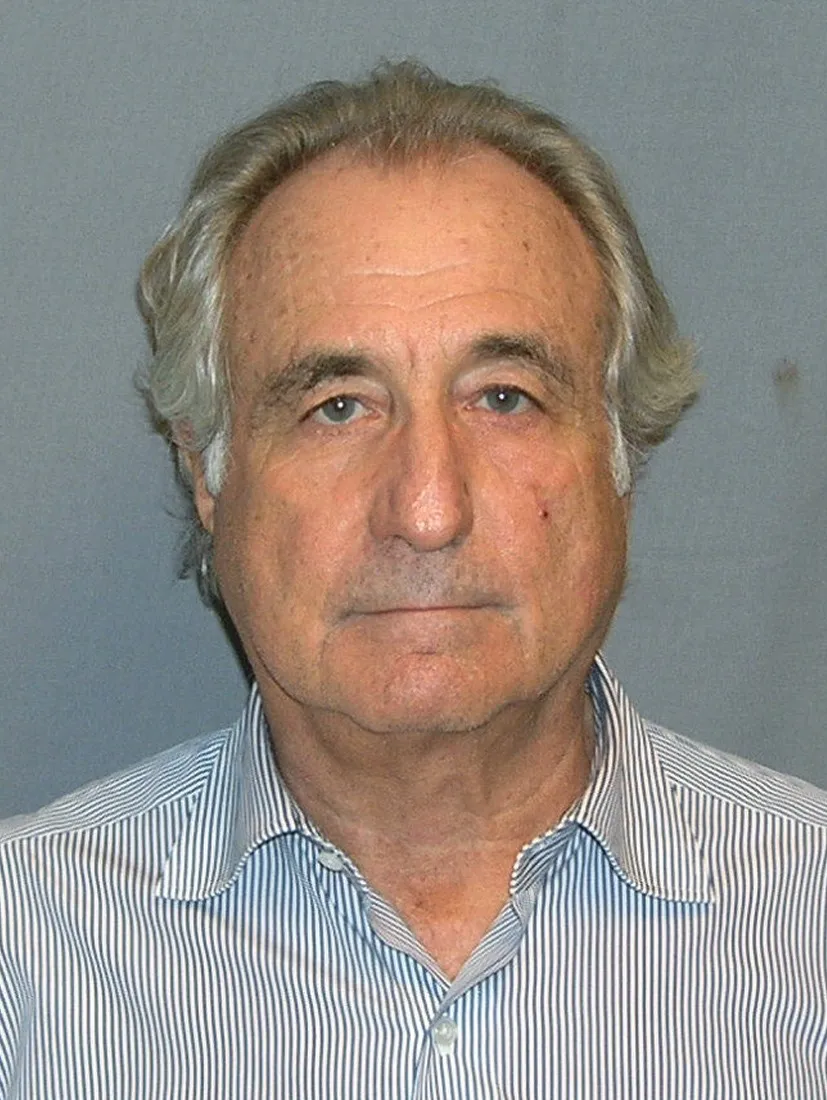
Status
Born in 1938. Deceased April 14, 2021 (died in federal prison at the Federal Medical Center, Butner, North Carolina).
Criminal status: Pleaded guilty March 12, 2009 to 11 federal felonies including securities fraud, money laundering, and perjury; sentenced to 150 years in prison; incarcerated 2009 until death
Summary
Bernie Madoff founded Bernard L. Madoff Investment Securities LLC in 1960, building it into one of Wall Street's largest market-making firms. He served as chairman of the NASDAQ Stock Market on three occasions in the 1990s, a position that lent his separate wealth-management division unparalleled institutional credibility.
In December 2008, he admitted to his sons that the investment advisory arm of his firm was a massive Ponzi scheme in which fabricated account statements had concealed decades of theft. The fund's collapse was triggered by investor withdrawals during the 2008 financial crisis, making it impossible to sustain the scheme. Madoff was arrested after his sons notified the FBI, and on March 12, 2009, he pleaded guilty to all 11 federal charges.
A federal judge sentenced him to 150 years in prison on June 29, 2009. He died in federal custody on April 14, 2021 at age 82.
Business Relationships
Five senior employees of Bernard L. Madoff Investment Securities were convicted of securities fraud on March 24, 2014 for helping conceal the Ponzi scheme: director of operations Daniel Bonventre, portfolio managers Annette Bongiorno and Joann Crupi, and computer programmers George Perez and Jerome O'Hara. Frank DiPascali, the firm's chief financial officer, pleaded guilty separately and cooperated with federal prosecutors.
Ownership
Madoff held sole ownership and control over Bernard L. Madoff Investment Securities LLC. The firm operated two distinct divisions: a legitimate market-making arm, and a fraudulent investment advisory division that executed the Ponzi scheme. Madoff maintained total personal authority over the advisory operation, keeping it physically separated from the trading floor and staffed by a small, hand-picked group.
Family & Heirs
Madoff married Ruth Alpern in 1959. His elder son Mark Madoff (1964–2010) worked at the firm's trading division and helped notify the FBI of the fraud; he died by suicide on December 11, 2010. His younger son Andrew Madoff (1966–2014) also worked at the firm and served as chairman of the Lymphoma Research Foundation; he died of mantle cell lymphoma in December 2014.
Neither son was convicted of any crime. A federal forfeiture order stripped Madoff of all personal property, leaving Ruth with $2.5 million. The couple's six grandchildren subsequently changed their last names.
Evidence
2003-03-01 - 😇 - Madoff donated to lymphoma research after son Andrew's diagnosis
2008-12-12 - 😈 - Madoff transferred $30M+ to family members, including $9M to brother Peter nine days before his arrest, as the Ponzi scheme neared collapse
2008-12-15 - 😈 - Fairfield pension fund loses $42M; 1,100 town workers and retirees victimized by Madoff scheme
2008-12-18 - 😈 - Madoff and firm associates gave $370K in federal campaign contributions, nearly 90% to Democrats
2009-03-12 - 😈 - Madoff pleads guilty to 11 federal felonies including securities fraud and money laundering
2009-06-29 - 😈 - Madoff sentenced to maximum 150 years for orchestrating the largest Ponzi scheme in US history
2009-09-10 - 😈 - Senate hearing: SEC ignored six Madoff fraud complaints from 1992 to 2008, Markopolos warnings disregarded for eight years
2010-12-11 - 😈 - Son Mark Madoff dies by suicide on the second anniversary of his father's arrest
2014-03-24 - 😈 - Five Madoff employees convicted of securities fraud for concealing the Ponzi scheme from regulators and investors
2016-07-03 - 😈 - Elie Wiesel Foundation for Humanity lost $15M to Madoff fraud, devastating Holocaust education work
2021-04-14 - 😈 - Madoff dies in federal prison at 82 having served 12 years of his 150-year sentence
2025-10-26 - 😈 - HSBC forced to book $1.1B provision after Luxembourg court rules against it in Madoff-linked Herald Fund restitution case
Analysis
Madoff's scheme operated for at least two decades by weaponizing the regulatory credibility his NASDAQ chairmanship conferred. Congressional investigators found that the SEC received six substantive complaints about his operations between 1992 and 2008 and failed to act on any of them, with multiple examination teams conducting parallel investigations without coordinating findings. The fraud consumed the retirement savings of ordinary workers — including 1,100 Fairfield, Connecticut employees whose pension fund was wiped out — alongside the endowments of institutions like the Elie Wiesel Foundation for Humanity, which lost $15 million dedicated to Holocaust education.
The human cost extended long after the arrest. Madoff's son Mark, who helped expose the fraud and was never charged with any crime, took his life on the two-year anniversary of his father's arrest after two years of civil litigation and public stigma he could not escape. Madoff's donation to lymphoma research following his son Andrew's diagnosis, along with the personal and foundation giving he made to a hospital and several charities before his arrest, was funded by money stolen from clients and does not offset the documented destruction he caused.
A tax-return review found that in the final months before the scheme collapsed, Madoff funneled more than $30 million to family members, including a $9 million loan to his brother Peter nine days before his own arrest — a pattern a former IRS official read as an effort to shield assets once he saw the fraud running out of road. The fraud's financial toll is still being litigated: in October 2025, a Luxembourg court ruling forced HSBC to book a $1.1 billion provision over a custodial claim tied to a Madoff feeder fund, nearly two decades after the scheme's exposure.
Questions
Harry Markopolos submitted detailed fraud warnings to the SEC across eight consecutive years without meaningful investigation. What does this sustained regulatory failure reveal about how financial watchdogs respond to credible whistleblowers who fall outside established institutional channels?
Madoff's scheme disproportionately devastated Jewish charitable foundations and Holocaust education organizations. Does a fraudster bear distinctive moral responsibility when the victims who trusted him most represent communities with which he personally identified?
Redemption Arc
Madoff offered a public apology to his victims at the time of sentencing but provided no comprehensive accounting of when the fraud began or the full scope of what he did with stolen funds. The court-appointed trustee's recovery effort returned nearly $15.4 billion to victims through seventeen distributions — a result achieved through prosecutors and trustees, not any cooperation by Madoff himself.